
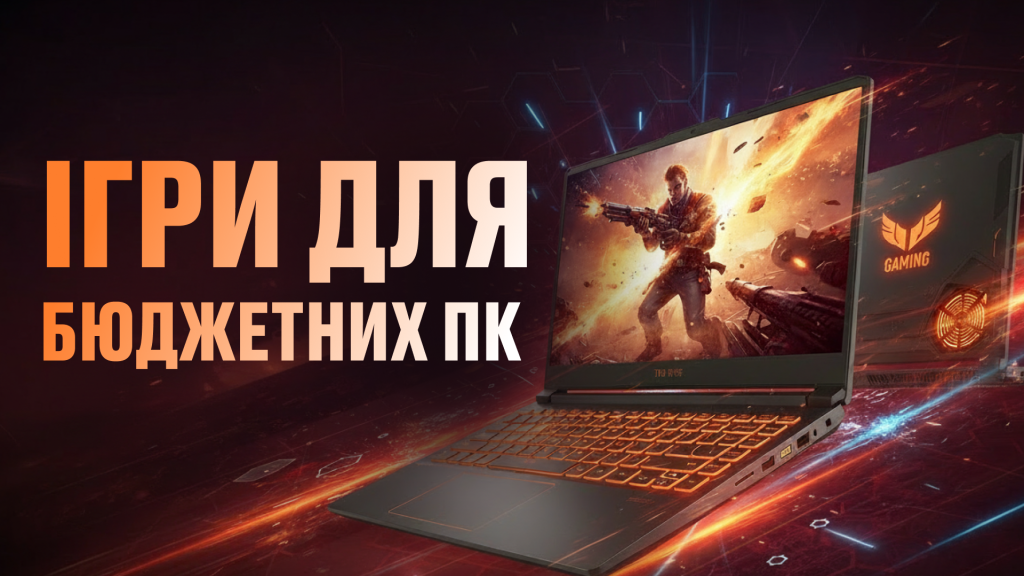
The demand for games for low-end PCs continues to grow every year. While the global gaming industry активно pushes high-end graphics and powerful hardware, millions of players around the world still use budget laptops and older desktop systems. For them, games on a low-end PC are not just a preference — they are the only accessible way to enjoy computer games.
Developers who understand this audience focus on smart production strategies, performance-first thinking, and efficient creation pipelines. Creating a game that runs smoothly on modest hardware requires technical discipline, creative problem-solving, and a deep understanding of optimization principles. In this article, we explore how optimized computer games are built and what makes them perform well even on weak systems.
Why Optimization Matters in Modern Computer Games
Modern computer games often prioritize visual fidelity: high-resolution textures, real-time lighting, detailed physics simulations, and massive open worlds. However, these features come at a cost. Without proper optimization, even mid-range computers struggle to maintain stable performance.
When developing games for low-end PCs, teams approach production differently from the very beginning. Optimization is not something added at the final stage — it is integrated into the core of game creation. Every technical and artistic decision affects performance: polygon counts, texture sizes, animation complexity, AI behavior, and even level design structure.
One of the most important aspects of creating a game for weaker hardware is defining realistic technical targets. Developers set a clear performance goal, such as 60 FPS on integrated graphics or stable 30 FPS on older GPUs. This target influences engine settings, asset production, and gameplay mechanics.
Another key principle is scalability. Optimized computer games allow players to adjust graphics settings based on their hardware. This includes reducing shadow quality, disabling post-processing effects, lowering resolution, or simplifying particle systems. Good scalability ensures that the same game can run on both powerful and low-end PCs.
Efficient memory management is also critical. Weak systems often have limited RAM and VRAM. Developers reduce texture sizes, reuse assets where possible, and carefully control how data is loaded and unloaded during gameplay. Streaming systems are commonly used so that only necessary assets are loaded at any given moment.
How Developers Build Games for Low-End PCs
The process of creating optimized games on a low-end PC starts long before release. It begins during pre-production and continues through every development stage. Teams that specialize in games for low-end PCs often follow structured optimization workflows.
Here are the core techniques used in creating a game that runs well on modest hardware:
- Lightweight art direction: Stylized visuals, low-poly models, and smart color design reduce performance costs while maintaining strong visual identity.
- Efficient game engines: Choosing an engine with strong performance tools and flexible rendering pipelines allows better hardware compatibility.
- Level optimization: Using occlusion culling and smart scene partitioning ensures that only visible objects are rendered.
- Code efficiency: Clean programming practices minimize CPU load and prevent unnecessary calculations.
- Performance testing on real low-end devices: Testing on weak hardware during development prevents late-stage surprises.
Art direction plays a particularly important role. Some of the most successful computer games with broad hardware compatibility use stylized graphics instead of photorealism. A clear artistic style often looks better and performs faster than an overloaded realistic environment.
Game mechanics are also designed with performance in mind. For example, instead of simulating hundreds of dynamic physics objects, developers may limit interactive elements or replace real-time calculations with precomputed animations. Artificial intelligence systems are simplified without sacrificing gameplay depth.
Optimization also involves reducing draw calls — one of the major performance bottlenecks in 3D games. Developers merge meshes, use texture atlases, and minimize material variations. These small technical decisions significantly improve performance on weaker GPUs.
Sound design can also impact performance. Compressed audio formats, efficient playback systems, and controlled audio channel usage help maintain stability on older systems.
Importantly, optimized games do not mean “low quality.” High-quality computer games can run perfectly on weak machines when development is guided by smart technical planning. Performance and creativity are not opposites — they complement each other when handled correctly.
Today, the market for games on a low-end PC remains highly relevant. Many players in emerging regions rely on older devices. Indie studios and smart development teams recognize that accessible performance expands audience reach and increases long-term success.
Creating a game with optimization as a priority requires discipline, testing, and technical knowledge. From art direction and code structure to memory management and scalable graphics settings, every stage of development influences performance. When done properly, games for low-end PCs prove that engaging gameplay, strong design, and smooth performance matter more than ultra-realistic graphics.
In the end, the future of computer games is not only about visual power but also about accessibility. Developers who master optimized creation processes build experiences that reach more players — regardless of their hardware limitations.